Website builder, template or custom build: which one fits your business
Building it yourself, buying a template or having a site designed for you: how the three compare on cost, time, quality and long-term value for small and mid-sized businesses.
A company website can cost $300 a year or $50,000 up front, and both numbers can be fair. The price depends on who builds it, how much of it is designed for you, and what it has to do besides look good. Below are the ranges we see in the US and in Europe, our own prices, and the costs that tend to appear only after launch.
 Patrik Beneš · Founder7 min read
For a small or mid-sized company that wants a professionally designed website with five to fifteen pages, a contact form and the option to edit content, expect to pay roughly $2,000 to $10,000 in the US and €1,500 to €8,000 in Western Europe. Anything below that is usually a builder or a lightly adjusted template. Anything above it usually includes custom features, integrations, a lot of content work or an agency process with several people involved.
These ranges come from price guides published by agencies and freelancers in both markets, and from the quotes our clients show us when they compare. They vary a lot from source to source, so treat them as a sanity check, not a price list.
| Route | US (one-time) | Netherlands / Western Europe | Typical timeline |
|---|---|---|---|
| Website builder, done yourself | $0–500 + $200–600/yr | €0–500 + €200–600/yr | A few weekends |
| Freelancer with a template | $1,000–5,000 | €750–3,000 | 2–6 weeks |
| Custom design, small business site | $3,000–10,000 | €2,000–8,000 | 3–10 weeks |
| Agency, custom features | $10,000–50,000+ | €8,000–40,000+ | 2–6 months |
| Online shop | $5,000–25,000+ | €5,000–25,000+ | 1–4 months |
Prices exclude VAT or sales tax. Dutch agencies typically charge €75–125 per hour, and US agencies more, which explains most of the gap between the two columns.
Two websites with the same number of pages can differ in price by a factor of five. These are the things that move the number, roughly in order of impact.
Booking, a product configurator, a price calculator, property listings, a client zone or a connection to your ERP or CRM. Each one is a small piece of software with its own design, logic, testing and admin. A single well-scoped feature often costs as much as the rest of the site.
A template with your logo is cheap because the design work was done once and sold many times. A custom design means someone studies your business and competitors, proposes a structure and designs the pages around your content. It costs more, and it's the main reason a site looks like your company instead of like a theme.
Copywriting, photography, translations and moving content from an old site are often left out of quotes and added later. If you need an agency to write the texts, budget for it explicitly. It's also the step that delays most projects, whoever does it.
If your team needs to edit pages, add case studies or publish news, the site needs a content management system, set up so that people can't accidentally break the layout. That adds setup and training. If you change the site twice a year, you may not need one at all. We wrote about that in Do you actually need a CMS?
Every extra language multiplies content work, adds technical setup (separate URLs, hreflang tags, a language switch) and means more pages to maintain. For companies selling in the Netherlands and abroad, Dutch plus English is common and worth planning from the start rather than bolting on.
An agency quote includes account management, meetings, internal reviews and margin. That isn't wasted money on large projects with many stakeholders. On a focused company website it often doubles the price without making the site better.
We publish our packages because most people searching for this question want a number, not a "contact us for a quote". These are one-time prices, excluding VAT:
| Package | EUR | USD | GBP | What it is |
|---|---|---|---|---|
| Start | €1,490 | $1,690 | £1,290 | Custom-designed company website, three homepage concepts, agreed subpages, inquiry form, SEO fundamentals, launch on your domain |
| CMS | €2,490 | $2,790 | £2,190 | Everything in Start, plus a CMS so your team can edit texts, photos, services and references, with training |
| Custom function | from €3,490 | from $3,890 | from £2,990 | Everything in CMS, plus one custom feature such as booking, a calculator, a configurator or listings |
How is that below the usual range for a custom design? Mostly through process, not shortcuts on the design. The technical groundwork (project setup, hosting, forms, basic SEO, tested components) is already built and improved with each project, the scope is fixed in writing before we start, and the people you talk to are the people building the site. Most of our websites go live one to three weeks after we receive the texts and materials. More detail is in the pricing section and the FAQ.
The launch price is only part of the bill. A typical company website has these yearly costs:
| Item | Typical yearly cost | Notes |
|---|---|---|
| Domain | $10–50 / €10–50 | Register it in your company's name, not the developer's |
| Hosting | $100–600 / €100–500 | More for heavy WordPress sites and shops |
| CMS or builder licence | $0–600 / €0–600 | Depends on the platform and plan |
| Maintenance | $400–2,400 / €390–2,000 | Updates, backups, monitoring and small fixes |
| Paid plugins, fonts, tools | $0–300 / €0–300 | Forms, cookie consent, analytics add-ons |
Our own maintenance plan is €390 a year, and extra work is billed at €75 an hour with the estimate approved before we start. Whoever you work with, ask for the yearly cost in writing before you sign, not just the launch price.
When clients show us three quotes ranging from $2,000 to $18,000, the suppliers are almost never pricing the same project. One includes three design concepts, copywriting and a CMS with training. Another is a theme with your logo and five pages filled with your existing texts. A third includes a discovery workshop, a brand refresh and six months of support.
The fix is simple: write down what you need, send the same brief to everyone and ask each supplier to list what is included and what isn't. Then compare line by line. The cheapest quote is often the one with the most items missing.
You'll get faster and more precise answers if your first message covers these points:
Then ask every supplier the same questions: Is the price fixed? What happens if we want something outside the scope? Who owns the code, the domain and the accounts? What does the site cost per year after launch?
If clients look at your website before they contact you, and in most B2B and service businesses they do, the website is part of your sales process. Spend accordingly, but pay for things a visitor will notice: design, content, speed, a form that works. Skip features nobody asked for.
A professionally designed website for a small or mid-sized business usually costs between $2,000 and $10,000 in the US and between €1,500 and €8,000 in Western Europe. Doing it yourself in a website builder costs a few hundred a year plus your time, and agency projects with custom features often go well past $10,000.
Plan for the domain, hosting, maintenance and any paid licences. For a typical company website that adds up to a few hundred up to around 2,500 dollars or euros a year, depending mostly on whether someone else handles updates, backups and small fixes.
Usually because the quotes describe different projects. One includes design concepts, copywriting, a CMS and launch support, another is a template with your logo. Ask every supplier to price the same written scope, and compare what is included rather than the total.
Not always. If the website plays a small role in how you win customers, a builder or a simple template is a reasonable choice. It becomes a false economy when clients judge you by the website, or when the site has to be rebuilt after two years because it is slow, hard to edit or impossible to extend.
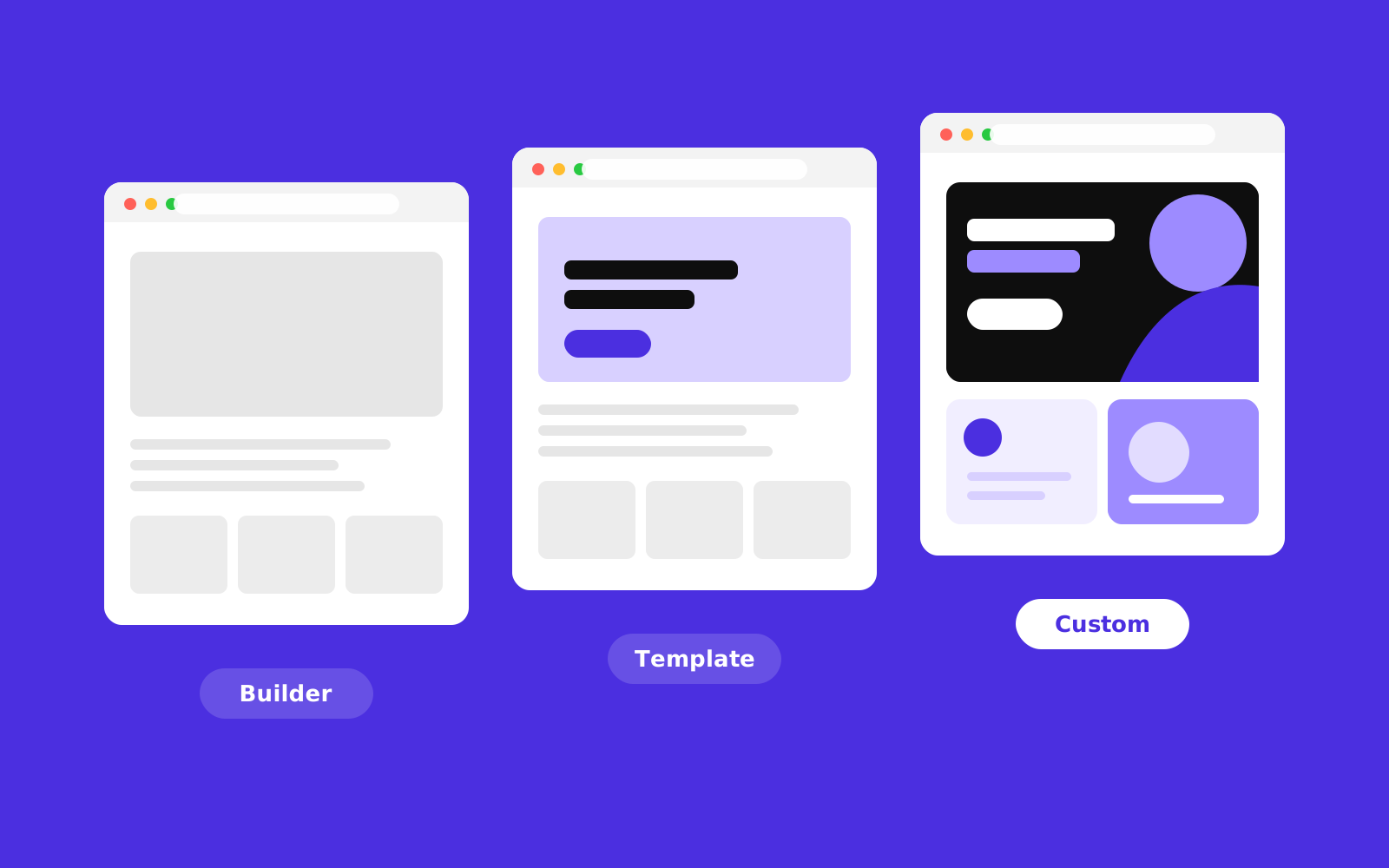
Building it yourself, buying a template or having a site designed for you: how the three compare on cost, time, quality and long-term value for small and mid-sized businesses.
A CMS lets you edit your website yourself, but plenty of businesses never use one. How to tell whether it will save you money or just give you more to maintain.

A company website earns its cost when it does a job: answers questions, filters leads, takes bookings. How to plan a site around the work it should do.